
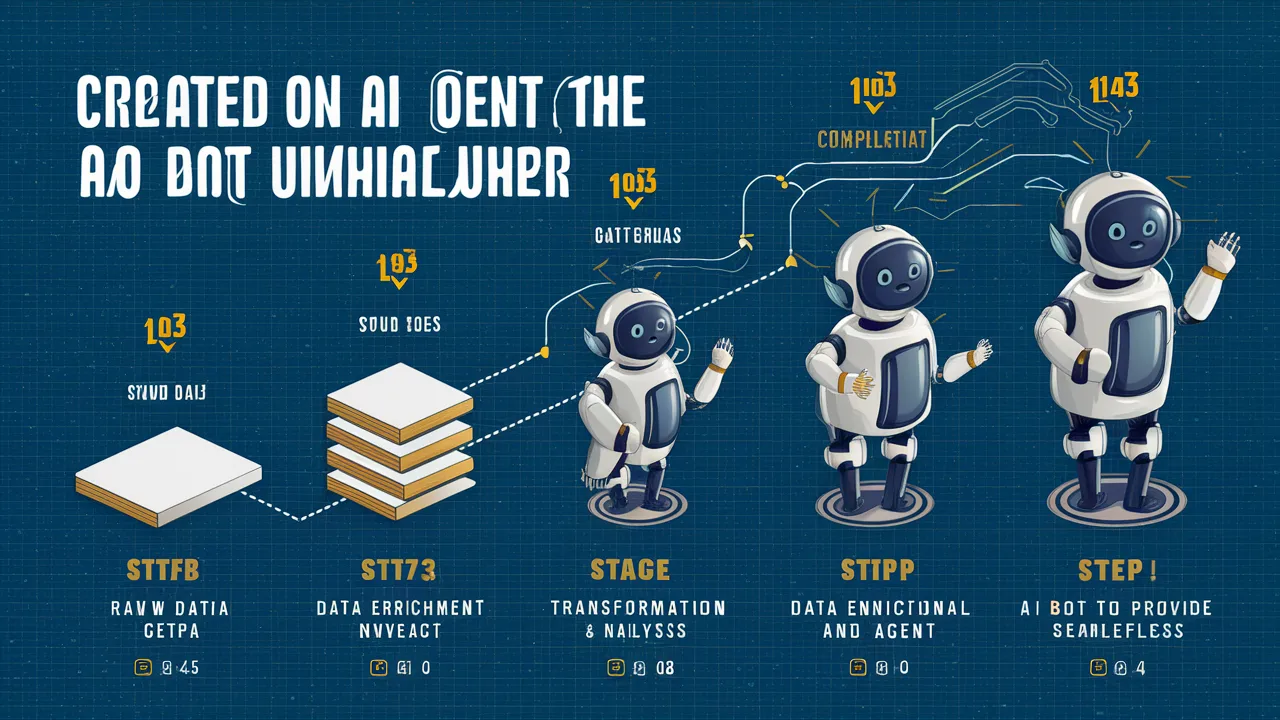
In the rapidly evolving landscape of artificial intelligence, organizations are shifting toward data-driven automation powered by scalable cloud platforms. We leverage Snowflake’s Data Cloud ecosystem to design, build, and deploy AI bot agents that are intelligent, efficient, and highly scalable. By integrating machine learning, natural language processing, and real-time analytics, we create AI agents capable of transforming workflows, enhancing customer interactions, and automating decision-making processes with precision.
Understanding AI Bot Agents in Snowflake
Buidling an AI Bot Agent Using Snowflake are autonomous systems designed to perform tasks, interact with users, and make decisions based on data. Within Snowflake, these agents operate on a unified data platform, enabling seamless access to structured and semi-structured datasets.
We utilize Snowflake’s capabilities to:
- Process large-scale datasets in real time
- Integrate AI models directly within the data warehouse
- Enable secure and governed AI workflows
This unified approach eliminates data silos and enhances AI performance and reliability.
Core Components of Building an AI Bot Agent
1. Data Ingestion and Preparation
We begin by ingesting data into Snowflake using pipelines that support structured and unstructured formats. Clean, well-organized data ensures optimal model performance. Data transformation tools are used to normalize and enrich datasets for AI readiness.
2. AI Model Integration
We integrate machine learning models using Snowflake-compatible frameworks. These models power the bot’s ability to understand user inputs, generate responses, and adapt over time. Leveraging pre-trained models accelerates development while maintaining accuracy.
3. Natural Language Processing (NLP)
We implement NLP techniques to enable human-like interaction. This includes:
- Intent recognition
- Entity extraction
- Context-aware responses
The result is a conversational AI bot capable of delivering meaningful and precise communication.
4. Workflow Automation
AI agents are designed to automate workflows such as customer support, data analysis, and reporting. By embedding logic and decision-making rules, we ensure that the bot performs tasks efficiently without human intervention.
5. Deployment and Scaling
Snowflake’s architecture allows seamless deployment of AI agents at scale. We ensure that the system handles high volumes of requests while maintaining low latency and high performance.
Step-by-Step Process to Build an AI Bot Agent
Step 1: Define Objectives
We clearly define the purpose of the AI bot—whether it is for customer service, analytics, or operational automation. This step determines the data and tools required.
Step 2: Set Up Snowflake Environment
We configure databases, schemas, and warehouses within Snowflake. Proper setup ensures smooth data processing and efficient resource utilization.
Step 3: Data Integration
We connect multiple data sources and load them into Snowflake. Data pipelines are optimized for real-time ingestion and transformation.
Step 4: Train AI Models
We train models using historical data. This step involves selecting algorithms, tuning parameters, and validating performance.
Step 5: Build the Bot Logic
We design the bot’s decision-making framework, including rules, triggers, and workflows. This defines how the bot interacts with users and systems.
Step 6: Integrate APIs
We connect the bot to external systems through APIs. This allows it to fetch data, execute commands, and deliver real-time responses.
Step 7: Test and Optimize
We conduct rigorous testing to ensure accuracy, performance, and reliability. Continuous optimization improves the bot’s effectiveness over time.
Advantages of Using Snowflake for AI Bot Development
Scalability
Snowflake’s cloud-native architecture enables us to scale AI workloads effortlessly, handling massive datasets and user interactions.
Performance
With high-speed query processing, Snowflake ensures that AI agents respond quickly and efficiently.
Security and Governance
Built-in security features protect sensitive data while maintaining compliance with industry standards.
Unified Data Platform
We eliminate the need for multiple tools by consolidating data, analytics, and AI development in one platform.
Best Practices for Building AI Bot Agents
- Use clean and structured data to improve model accuracy
- Implement continuous learning mechanisms for adaptability
- Monitor performance using analytics dashboards
- Optimize queries to reduce latency
- Ensure robust security measures for data protection
Real-World Use Cases
Customer Support Automation
AI bots handle inquiries, resolve issues, and provide instant responses, reducing workload and improving user satisfaction.
Data Analysis and Reporting
Bots analyze datasets and generate insights, enabling faster decision-making.
E-commerce Personalization
AI agents recommend products based on user behavior, enhancing engagement and conversions.
Financial Services
Bots assist in fraud detection, risk assessment, and transaction analysis with high accuracy.
Future of AI Bot Agents with Snowflake
The future of AI bot development lies in real-time intelligence and autonomous decision-making. With continuous advancements in AI and cloud computing, we expect Snowflake-powered bots to become more adaptive, context-aware, and capable of handling complex tasks. Integration with advanced AI frameworks will further enhance their capabilities, making them indispensable across industries.
Conclusion
We establish a powerful framework for Buidling an AI Bot Agent Using Snowflake by combining scalable infrastructure, advanced analytics, and intelligent automation. This approach ensures that organizations can deploy efficient, secure, and high-performing AI solutions tailored to their needs. By leveraging Snowflake’s capabilities, we create AI agents that not only streamline operations but also drive innovation and growth in a competitive digital landscape.
Frequently Asked Questions (FAQ)
1. What is an AI bot agent in Snowflake?
An AI bot agent is an automated system that uses data and machine learning within Snowflake to perform tasks, interact with users, and deliver intelligent responses.
2. Do we need coding experience to build an AI bot in Snowflake?
Basic programming knowledge is beneficial, but many tools and frameworks simplify the process, making it accessible to a broader audience.
3. How scalable are AI bots built on Snowflake?
Snowflake’s architecture allows AI bots to scale seamlessly, handling large datasets and high user demand efficiently.
4. Can AI bots integrate with external systems?
Yes, AI bots can connect to APIs and external platforms, enabling real-time data exchange and functionality.
5. What industries benefit most from AI bot agents?
Industries such as healthcare, finance, e-commerce, and customer service benefit significantly from AI-driven automation and insights.
