
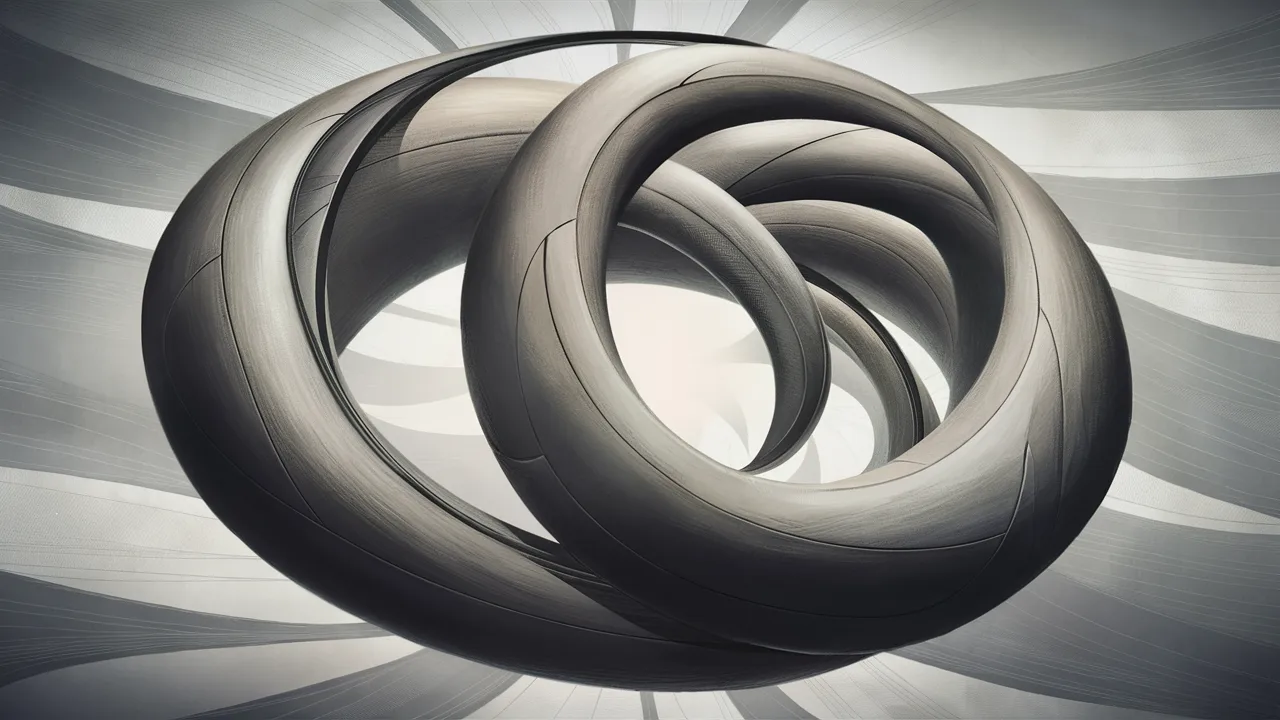
In the journey toward mastering fundamental drawing skills, we recognize that ellipses play a critical role in constructing believable forms and structures. Within the Drawabox methodology, the concept of the curvy ellipse is not merely about shape but about developing confidence, control, and consistency in linework. Whether drawing cylinders, wheels, or organic forms, the ability to execute smooth and accurate ellipses determines the overall quality of a sketch. We explore the essential principles, techniques, and exercises required to perfect curvy ellipses and elevate drawing proficiency to a professional level.
Understanding the Importance of Curvy Ellipses in Drawabox
We emphasize that Drawabox Curvy Ellipse are foundational elements in perspective drawing. A properly drawn ellipse communicates depth, orientation, and structure, making it indispensable for artists working in both technical and creative fields.
In Drawabox, the focus is not on perfection but on confidence in execution. A curvy ellipse is characterized by smooth, continuous strokes, avoiding hesitation or stiffness. This approach trains the brain and hand to work together, producing lines that feel natural and deliberate rather than forced.
The Core Principle: Confidence Over Accuracy
We prioritize confidence as the most important factor when drawing ellipses. A common mistake among beginners is attempting to draw slowly in pursuit of accuracy, resulting in wobbly and uneven shapes.
Instead, we advocate for the ghosting method, where the artist rehearses the motion multiple times before committing to the stroke. This technique builds muscle memory and ensures that the final line is drawn with fluidity and precision.
By focusing on confident strokes, accuracy improves naturally over time, leading to more consistent and visually appealing ellipses.
Step-by-Step Process to Draw Curvy Ellipses
1. Establish the Boundaries
We begin by defining the space in which the ellipse will exist, such as a plane or a box. This helps maintain proportional consistency.
2. Use the Ghosting Technique
Before drawing, we simulate the motion repeatedly without touching the paper. This builds muscle coordination and rhythm.
3. Draw Through the Ellipse
We recommend drawing the ellipse two to three times in a single motion, maintaining a continuous flow. This reinforces smoothness and reduces hesitation.
4. Maintain Even Curvature
Focus on keeping the curve consistent throughout the shape, avoiding sharp angles or flat sections.
5. Accept Imperfection
We acknowledge that early attempts may not be perfect. The goal is to develop confidence and consistency, not flawless shapes.
Common Mistakes and How to Fix Them
We identify several common issues that hinder progress:
Wobbly Lines
Caused by drawing too slowly. The solution is to increase speed and trust the motion.
Uneven Shapes
Often due to inconsistent pressure or hesitation. Practicing the ghosting method helps correct this.
Overthinking the Stroke
Leads to stiffness. We recommend focusing on flow rather than control.
Inconsistent Alignment
Occurs when ellipses do not align with their intended planes. Using guidelines improves accuracy.
By addressing these mistakes, artists can significantly improve their ellipse quality.
Practicing Ellipses in Different Contexts
We highlight the importance of practicing ellipses in various scenarios:
Ellipses in Planes
Helps develop control within defined boundaries.
Funnels Exercise
Trains alignment and symmetry by placing ellipses along a central axis.
Ellipses in Perspective
Enhances understanding of how ellipses change based on viewing angle.
Each exercise contributes to building a comprehensive skill set, ensuring that ellipses remain consistent across different applications.
Developing Muscle Memory and Line Confidence
We stress that repetition is key to mastering curvy ellipses. Regular practice allows the hand to develop muscle memory, making smooth strokes more natural over time.
Consistency in practice leads to improved line confidence, which is essential for all aspects of drawing. As confidence increases, the quality of ellipses improves, resulting in more polished and professional artwork.
Advanced Techniques for Perfect Curvy Ellipses
We explore advanced strategies for refining ellipse drawing:
- Varying ellipse degrees to represent different angles
- Maintaining consistent minor axes for alignment
- Adjusting pressure for cleaner lines
- Combining ellipses with structural forms
These techniques allow artists to create more dynamic and realistic drawings.
Applying Curvy Ellipses to Real Drawings
We demonstrate how mastering ellipses enhances overall drawing ability. From constructing cylinders to designing complex objects, ellipses provide the foundation for accurate and believable forms.
Artists who develop strong ellipse skills can approach drawings with greater confidence, resulting in cleaner compositions and improved spatial understanding.
Conclusion
We conclude that mastering the Drawabox curvy ellipse is a crucial step in developing strong drawing fundamentals. By focusing on confidence, consistent practice, and proper technique, artists can transform their linework and achieve remarkable improvements in accuracy and flow. The journey requires patience and dedication, but the results lead to a deeper understanding of form, perspective, and artistic expression.
FAQ
1. What is a curvy ellipse in Drawabox?
It refers to an ellipse drawn with smooth, confident strokes, emphasizing flow over perfection.
2. Why do my ellipses look wobbly?
Wobbling is usually caused by drawing too slowly or hesitating during the stroke.
3. How can I improve my ellipse accuracy?
Practice the ghosting method and draw through your ellipses to build consistency.
4. How often should I practice ellipses?
Daily practice is recommended to develop muscle memory and confidence.
5. Are perfect ellipses necessary?
No, the focus should be on confidence and smoothness, as accuracy improves with time.
