
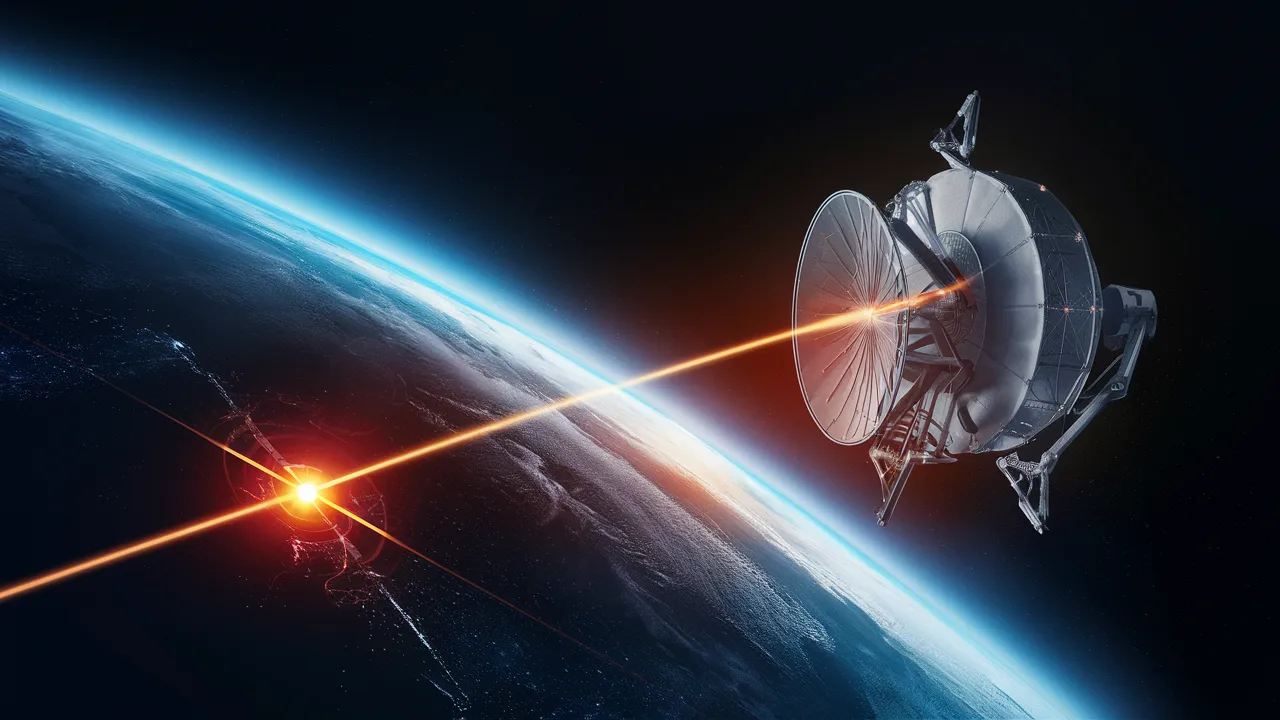
The concept of China moon laser targeting has captured global attention as space technology continues to evolve at an unprecedented pace. With advancements in laser systems, satellite tracking, and lunar exploration, researchers and scientists are exploring new ways to use laser technology for precision measurement, communication, and navigation in space. As a leading force in space innovation, China has made significant progress in lunar missions and laser-based technologies, particularly through its ambitious exploration programs.
This comprehensive article examines the science behind lunar laser targeting, its applications in space exploration, and the broader implications for global technology and research, providing a detailed and authoritative overview of this emerging field.
Understanding Moon Laser Targeting Technology
China Moon Laser Targeting refers to the use of high-precision laser systems to measure distances, track objects, and facilitate communication between Earth and lunar surfaces. This technology is not about weaponization but rather about scientific measurement, navigation, and data transmission. By sending laser pulses from Earth to the Moon and reflecting them back, scientists can calculate distances with extreme accuracy.
Countries like China have been actively investing in these technologies as part of their broader space exploration goals, aiming to improve lunar mapping, spacecraft navigation, and research capabilities.
China’s Lunar Exploration Program
China’s lunar exploration efforts are led by the Chinese Lunar Exploration Program, often associated with the Chang’e missions. These missions have successfully deployed landers, rovers, and orbiters, contributing valuable data about the Moon’s surface and environment.
Laser technology plays a key role in these missions by enabling:
- Accurate distance measurement between Earth and Moon
- Precise landing and navigation systems
- High-speed data communication
These capabilities enhance mission success and improve the overall efficiency of space operations.
How Laser Targeting Works in Space
Laser Ranging
Laser ranging involves sending a laser beam from Earth to a reflector on the Moon and measuring the time it takes for the beam to return. This allows scientists to determine the exact distance between Earth and the Moon, often with millimeter-level precision.
Optical Communication
Laser systems are used for high-speed data transmission, offering faster and more secure communication compared to traditional radio signals.
Navigation and Positioning
Laser targeting helps spacecraft determine their position and trajectory, ensuring accurate navigation during lunar missions.
Applications of Moon Laser Targeting
Scientific Research
Laser measurements provide critical data for studying the Moon’s orbit, rotation, and geological structure.
Space Navigation
Precise targeting systems enable spacecraft to land safely and navigate complex lunar terrains.
Communication Systems
Laser-based communication supports faster data exchange between Earth and space missions.
Future Lunar Bases
As plans for lunar habitats develop, laser technology will play a role in infrastructure development and operational coordination.
Global Significance of China’s Advancements
The progress made by China in moon laser targeting reflects a broader trend of increased competition and collaboration in space exploration. These advancements contribute to:
- Improved global understanding of lunar science
- Technological innovation across industries
- Enhanced international cooperation in research
China’s achievements highlight the importance of continued investment in space technology and scientific discovery.
Challenges and Limitations
Despite its potential, moon laser targeting faces several challenges:
Atmospheric Interference
Earth’s atmosphere can affect laser accuracy, requiring advanced correction techniques.
Technical Complexity
Developing and maintaining high-precision laser systems involves significant expertise and resources.
Cost and Infrastructure
Implementing these technologies requires substantial investment in equipment and facilities.
Future of Moon Laser Technology
The future of China moon laser targeting is closely tied to the evolution of space exploration. Key developments may include:
- Enhanced laser communication networks
- Integration with satellite systems
- Support for human lunar missions
- Expansion into deep-space exploration
As technology advances, laser systems will become even more critical in enabling efficient and reliable space operations.
Why This Technology Matters
Moon laser targeting represents a significant step forward in precision science and space exploration. It allows researchers to gather highly accurate data, improve mission outcomes, and develop new technologies that can benefit multiple sectors, including telecommunications and navigation.
The contributions of China in this field demonstrate how innovation can drive progress and open new possibilities for humanity’s exploration of space.
Conclusion
The rise of China moon laser targeting technology marks an important milestone in the advancement of space science and exploration. By leveraging high-precision lasers for measurement, communication, and navigation, China is contributing to a deeper understanding of the Moon and the broader universe.
As global interest in lunar exploration continues to grow, these technologies will play a crucial role in shaping the future of space missions. With ongoing research and development, moon laser targeting is set to become a cornerstone of next-generation space innovation.
Frequently Asked Questions (FAQ)
1. What is moon laser targeting?
It is the use of laser technology to measure distances, track objects, and communicate with lunar missions.
2. Is China using lasers on the Moon for military purposes?
Publicly known applications focus on scientific research, navigation, and communication, not weaponization.
3. How accurate is laser ranging to the Moon?
It can measure distances with extreme precision, often within millimeters.
4. Why is laser communication important in space?
It allows for faster and more efficient data transmission compared to traditional methods.
5. What is China’s role in lunar exploration?
China is a leading contributor through its advanced missions and technological innovations.
